
Buy a DC fast charger and keep the revenue
For owners who want the asset and the return. Fulcrum evaluates your site, sizes the equipment, prepares the utility and rebate applications, and coordinates installation. You own the station, set the price and keep the charging revenue.
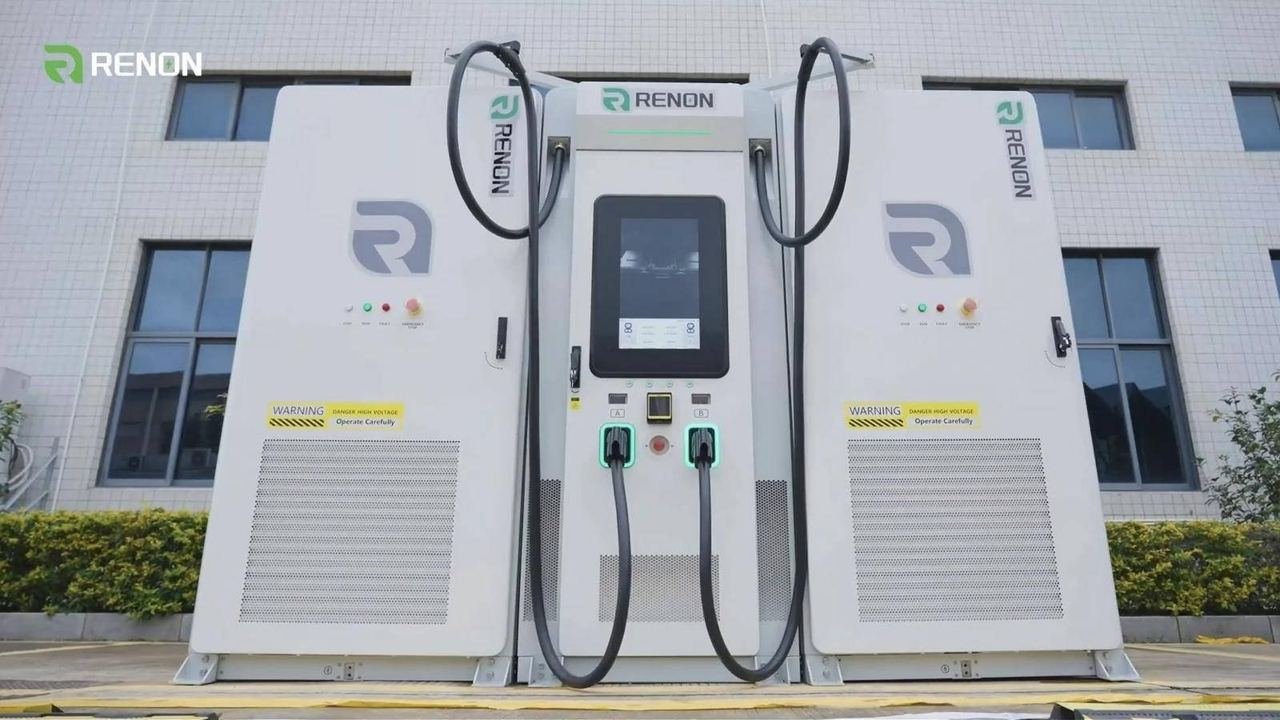
One team from site review to go-live
You make the decisions; we handle the engineering, paperwork and coordination.
- Site evaluation and equipment sizing
- Utility, rebate and permit applications
- Installation and commissioning coordination
- Payment and network software setup
- Optional maintenance and monitoring plans
What owning a station earns
Revenue scales with use. We model it for your site, along with electricity costs, network fees, rebates and payback.
The formula
Annual charging revenue = sessions per day × kWh per session × your price per kWh × 365.
What comes out of it
Electricity (including demand charges), network and payment fees, and maintenance. Storage can cut the demand charge portion.
An asset on your books
A long-lived asset with tax benefits such as depreciation. Your tax advisor can confirm what applies to you.
Your station, your rules
Set pricing, hours and access. Offer discounts to customers or reserve spaces for tenants and fleet vehicles.
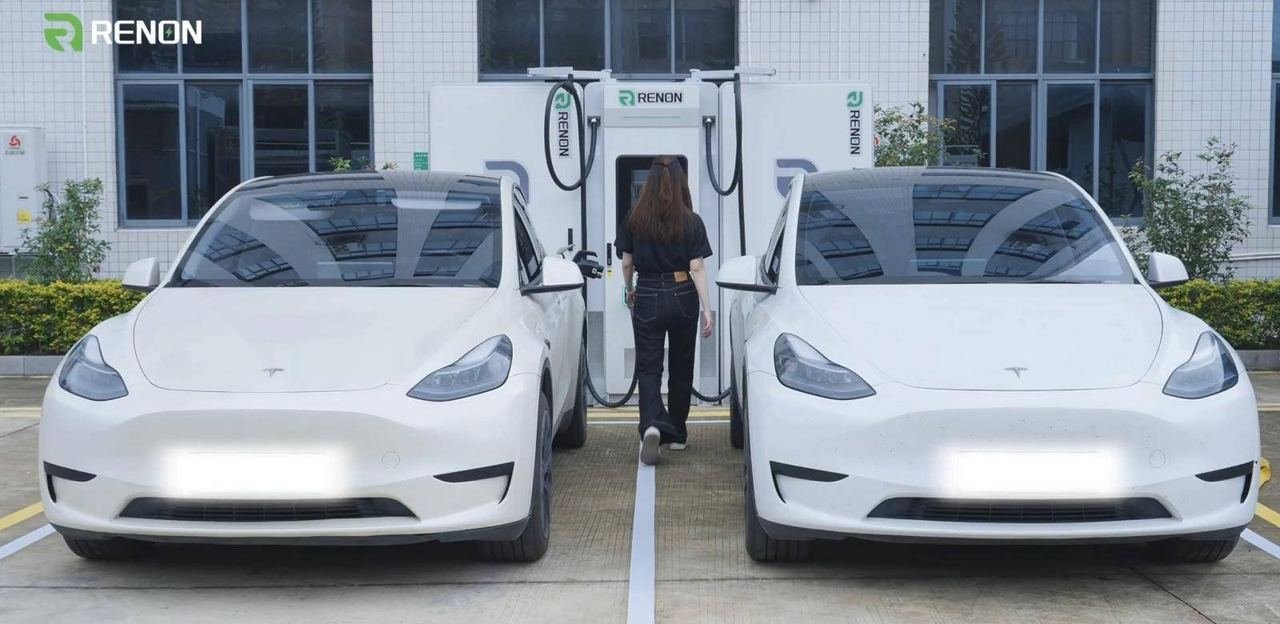
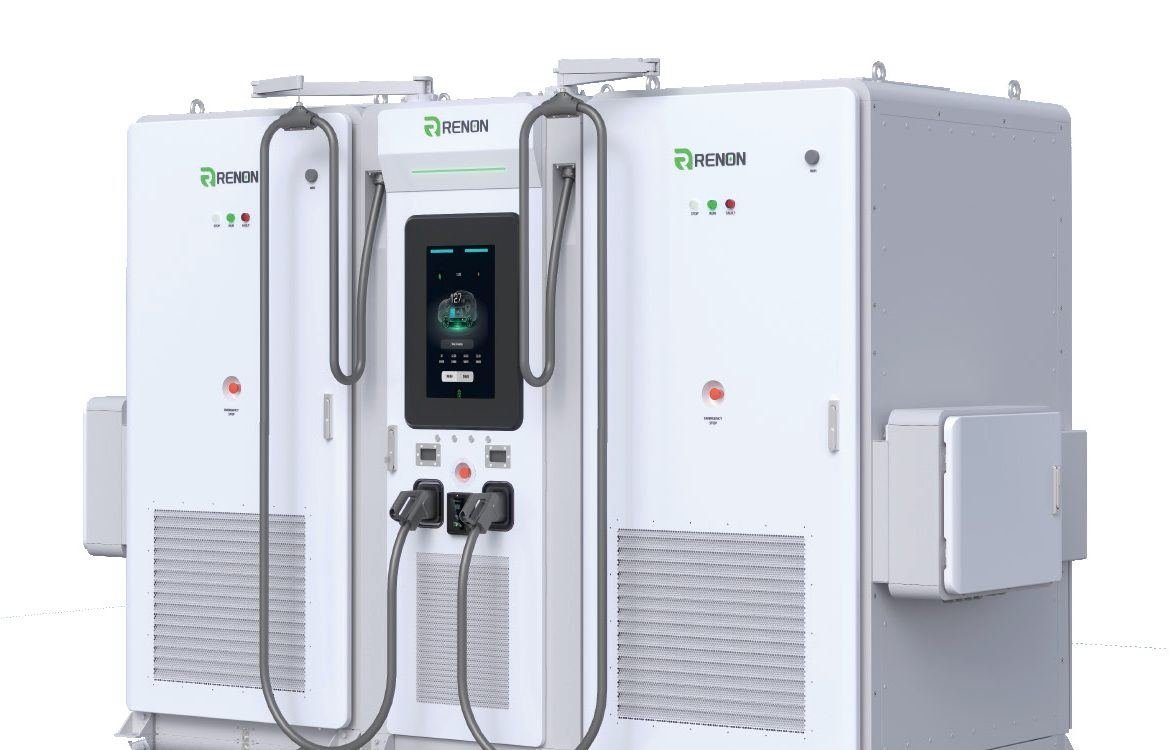
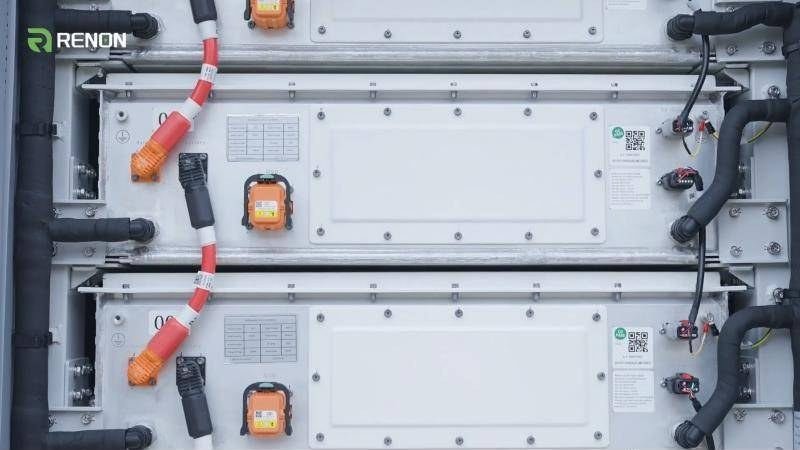
Charger and battery in one station
Where storage makes sense, we use storage-integrated fast chargers such as the Renon EStand. Each unit pairs a 400 kW dual-connector charger with two 261 kWh liquid-cooled battery cabinets, which can reduce the utility upgrade a site needs and keep demand charges in check.
The charger scales in 40 kW modules from 160 to 400 kW, the batteries are rated for 8,000 or more cycles, and units can run in parallel for larger sites.
See the EStand up close
A walkthrough of a working unit from Renon: the charger, the battery cabinets, and how built-in storage gets around limited power capacity and high demand charges at commercial sites.
EV charging rebates in Connecticut
Eversource and UI run Connecticut's commercial EV charging program. For DC fast charging through Eversource:
- Rebates up to $150,000 per site, or up to $250,000 in underserved communities.
- Applications are accepted in an annual window and ranked. The 2026 window ran March 15 to June 1 and is closed; awards are expected in March 2027.
- The federal 30C charging tax credit ended for chargers not in service by June 30, 2026.
We plan projects around the next window. Details: Eversource business EV charging rebates · CT DEEP on the 30C credit.
Program details as of November 2026.
Buying questions
What does a DC fast charger cost?
It depends on charger power, the number of ports, and especially the electrical work and utility upgrades your site needs. We quote after the site review, net of available rebates.
Do I need battery storage with my charger?
Not always. It depends on your utility rates and demand charges, available incentives and expected use. We model your site with and without storage.
Who maintains the station?
You can choose an optional Fulcrum plan with monitoring and response, or arrange your own.
How do drivers pay?
We set up payment and network software so drivers can pay by app or card, and you can see sessions and revenue.
Related
Get a purchase quote
Tell us about your site and how you expect it to be used. We'll size the station and model the numbers.